

Prepaid expenses cannot be expensed as soon as you pay for a service or goods because your business benefits from it over a period of time. And according to GAAP (generally accepted accounting HVAC Bookkeeping principles), when you record an expense, you must realize the benefit from the asset in the same accounting period. Prepaid rent involves payments made for property or equipment use before the rental period begins. Under International Financial Reporting Standards (IFRS), these payments are initially recorded as assets and then systematically expensed over the lease term, aligning with the matching principle.

Current asset vs. noncurrent asset
Prepaid expenses represent costs that are paid in advance but have not yet been consumed or utilized by the business. Examples include prepaid rent, prepaid insurance premiums, prepaid subscriptions, and prepaid service contracts. These expenses are initially recorded as assets on the balance sheet because they represent future economic benefits to the company. From paying rent in advance to stocking up on inventory, these expenses represent future benefits already paid for. It’s a crucial accounting process that ensures accurate financial reporting and a clear picture of your company’s performance.
- This classification provides insight into a company’s short-term financial health and liquidity.
- Prepaid cards are not considered as assets, because they do not have future economic benefits.
- As mentioned above, prepaid rent refers to the advance payment of rental for the right to use such rent over a period of time.
- If a company pays $12,000 for a year’s rent in advance, the prepaid rent account will be debited for $12,000 and the cash account will be credited for the same amount.
- Accurate accounting for prepaid assets begins with recognizing these payments as assets on the balance sheet at the time of the transaction.
- This is because the company has paid the expense in advance, but hasn’t yet received the benefit.
- By amortizing $1,000 each month, they spread the cost over the coverage period, ensuring accurate and consistent financial reporting.
Mastering Prepaid Expense Amortization
At the end of twelve months, the asset account would show a balance of zero for the insurance premium and a total of $12,000 in the insurance expense account. In other words, the business must determine what the expense would cost if it were paid for on a monthly basis instead of all at once for the entire year. The process also has the effect of incrementally reducing the total value of the prepaid asset over the duration of its useful life. Prepaid assets, when managed prudently, can significantly influence a company’s financial statements. This temporary increase in assets can be advantageous, particularly when companies seek to enhance liquidity ratios such as the current ratio. A strong current ratio, often benchmarked above 1.5, signals a robust liquidity position, reassuring investors and creditors of the company’s short-term financial health.
- Amortization of prepaid expenses is the systematic allocation of an advance payment over multiple accounting periods.
- Prepaid expenses are also considered a current asset because they can be easily liquidated—the value can be realized or converted to cash in one year or less.
- One of the more common forms of prepaid expenses is insurance, which is usually paid in advance.
- Amortization allows you to spread out the costs for the use of a long-term asset over the expected period the asset will provide value.
- Creating an amortization schedule is essential for tracking the allocation of prepaid expenses.
Two methods of accounting for prepaid expenses
Prepaid expense amortization sometimes requires more complex calculations beyond simple straight-line division, particularly when the benefit or usage varies over time. These calculations must consider several factors from the underlying contracts and actual usage patterns. Despite are prepaid expenses amortized the name, prepaid expenses aren’t recorded as expenses initially — they’re considered assets.And you have to be careful while recording them. Immediately expensing prepaid expenses can cause profits to fluctuate, making performance benchmarking over a period of time difficult. Failure to adjust these expenses accurately leads to the account balance remaining the same, which overstates the value of any prepaid expenses as an asset. Businesses often negotiate discounts or favorable terms by paying in advance, leading to long-term savings.
Amortization Of Prepaid Expenses: Definition, Example & Why It Matters

This approach aligns with accounting principles and aids in strategic decision-making. Proper amortization can reveal how efficiently a company utilizes its resources, providing insights into operational effectiveness. In industries where cash flow management is vital, such as retail or manufacturing, understanding the timing and impact of expense recognition can inform budget adjustments and investment decisions.
- It’s calculated by dividing these liquid assets by current liabilities, providing a more conservative view of a company’s liquidity.
- Amortization of prepaid expenses is a fundamental accounting practice that helps businesses accurately track and record advance payments over time.
- This systematic approach prevents distortions that would occur if large prepaid expenses were recorded entirely in one period.
- Similarly, the expense will reach the total of the prepaid amount at the end of that same period.
- For example, ABC Co has paid an advance rental at the beginning of the year for space usage for one year until the end of the year.
- They amortize $2,000 each month, reflecting the expense in their financial statements over the subscription period.
- However, under the new lease accounting pronouncements, the guidance eliminates recognizing prepaid assets on the balance sheet related to leases exceeding a total lease term of 12 months.
- Correctly allocating and amortizing expenses can be challenging, particularly for companies that rely heavily on manual accounting processes.
- A small tech startup prepays $24,000 for an annual subscription to essential software tools.
- To accurately reflect the usage of prepaid expenses, businesses must amortize them over the period they are consumed.
- Would you rather pay $200 each month for one year or prepay $1,500 for the entire year and save $900?
- Prepaid assets typically fall in the current asset bucket and therefore impact key financial ratios.
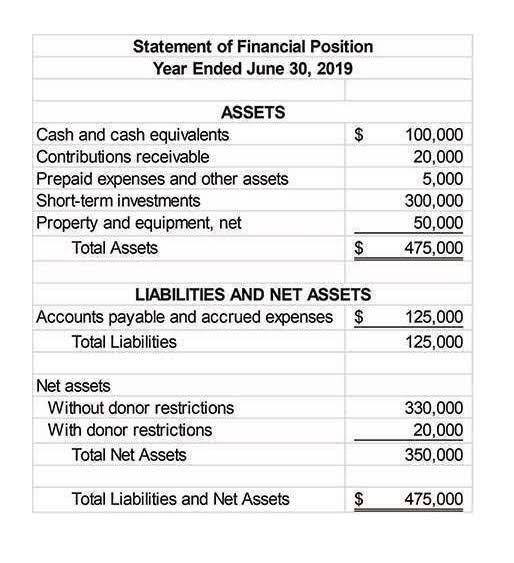
Note how the “prepaid expenses” are consolidated with “other current assets” in one line item, which is often the case. One of the more common forms of prepaid expenses is insurance, which is usually paid in advance. Each month, an adjusting entry will be made to expense $10,000 (1/12 of the prepaid amount) to the income statement through a credit to prepaid insurance and normal balance a debit to insurance expense. In the 12th month, the final $10,000 will be fully expensed and the prepaid account will be zero. The process involves reviewing all prepaid expenses and calculating the portion consumed within the period. This often requires adjusting for expenses like prepaid rent or insurance that span multiple periods.